President Donald Trump’s crackdown on migration has not only been enforced on the ground but also in his official communication. The White House’s visual communication is resolute yet at the same time comical. It portrays President Trump as a guarantor of law and order. This visual framing of his presidency is not coincidental. Earlier examples from his first term feature similar imagery and videos, especially during the Black Lives Matter protests in 2020 (see Figure 1). These images are reminiscent of power-projecting propaganda. Such forms of political communication are usually associated with autocrats such as Venezuelan ex-president Nicolas Maduro or Turkish President Erdogan.
What is the purpose of this heavy-handed visual strongman propaganda? How does the public perceive and react to it? And is it effective in making the government look stronger in the eyes of citizens? In three pre-registered survey experiments recently published in the European Journal of Political Research, Perspectives on Politics, and the Journal of Peace Research, we systematically explored these questions across three countries: Turkey, the United States, and Venezuela.

Figure 1: From left to right- bottom: Turkish propaganda video, Maduro with security forces, Trump during the BLM protests.
Is visual strongman propaganda effective?
Previous studies on information control in autocracies gives us an important baseline expectation derived from the closed autocratic system in China. The main purpose of the kind of “hard propaganda” often used in China is quite unlike other forms of propaganda. Its main goal is not necessarily to persuade, but to dominate. It is intended to signal resolve and thereby deter opposition to the government. But does such propaganda also work in autocracies that face more contestation (Venezuela), hold competitive but unfair elections (Turkey) or even in democracies (the United States)?
Across our three studies, we argue that regime type, extent of contestation, and societal polarization matter. They shape how such propaganda is perceived and whether it works to deter anti-government movements. Figure 2 displays one key outcome that we study, citizens’ stated willingness to join anti-government protests, normalized across our three studies. We expect that the deterrence effects of hard propaganda are most noticeable for citizens initially opposed to the government. In addition, for our Turkish experiment, we study two distinct points in time, contrasting a politically stable versus a contested electoral period.
Does hard visual propaganda deter anti-government protest?
Despite variation in experimental designs and country contexts, the general picture from our results is clear. Coercive forms of visual government propaganda highlighting repressive capacities have a noticeable effect on citizens opposing the government in all three countries.
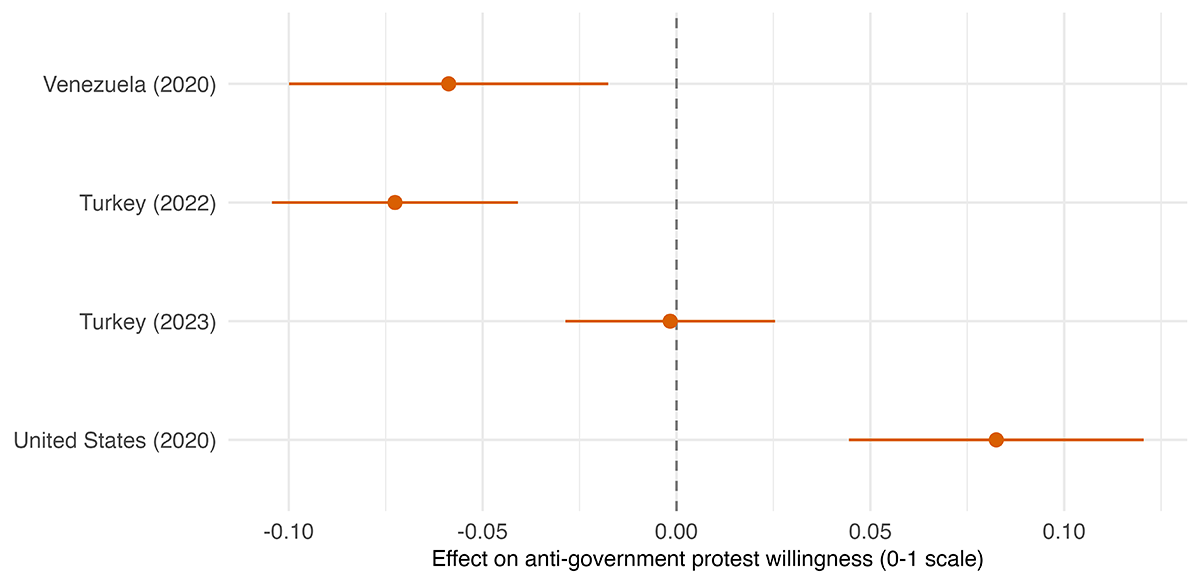
Figure 2: Effects on anti-government protest
In line with the baseline expectation from China, hard propaganda deters anti-government protests in Venezuela (2020) and Turkey (2022). Exposure decreases the likelihood to report joining an anti-government protest between six and seven percentage points during politically stable times. In sharp contrast, during the heated electoral presidential campaign in Turkey in 2023, this deterrence effect attenuates to zero. In other words, when anti-government citizens are already mobilized, hard propaganda fails to deter.
The result from the United States is strikingly different. During the Black Lives Matter protests in 2020 hard visual propaganda backfired—it increased protest willingness among opponents. This clearly suggests that democratic leaders borrowing from the authoritarian playbook must expect resistance, particularly in polarized societies.
What explains these results?
In the Turkish study, we dug deeper into the potential mechanisms behind these patterns, focusing on how power-projecting propaganda provokes different emotions and feelings among opponents and supporters. Figure 3 illustrates that this type of propaganda evokes both anxiety and anger among government opponents. Surprisingly though, it also increases the feeling of societal belonging, suggesting that these often very nationalistic propaganda videos may indeed also persuade some opponents. But we also show in our study that this persuasion effect is much stronger for government supporters. Among core supporters it increases the willingness to join pro-government protests. This is especially true during contested periods, when autocrats benefit the most from pro-government mobilization.
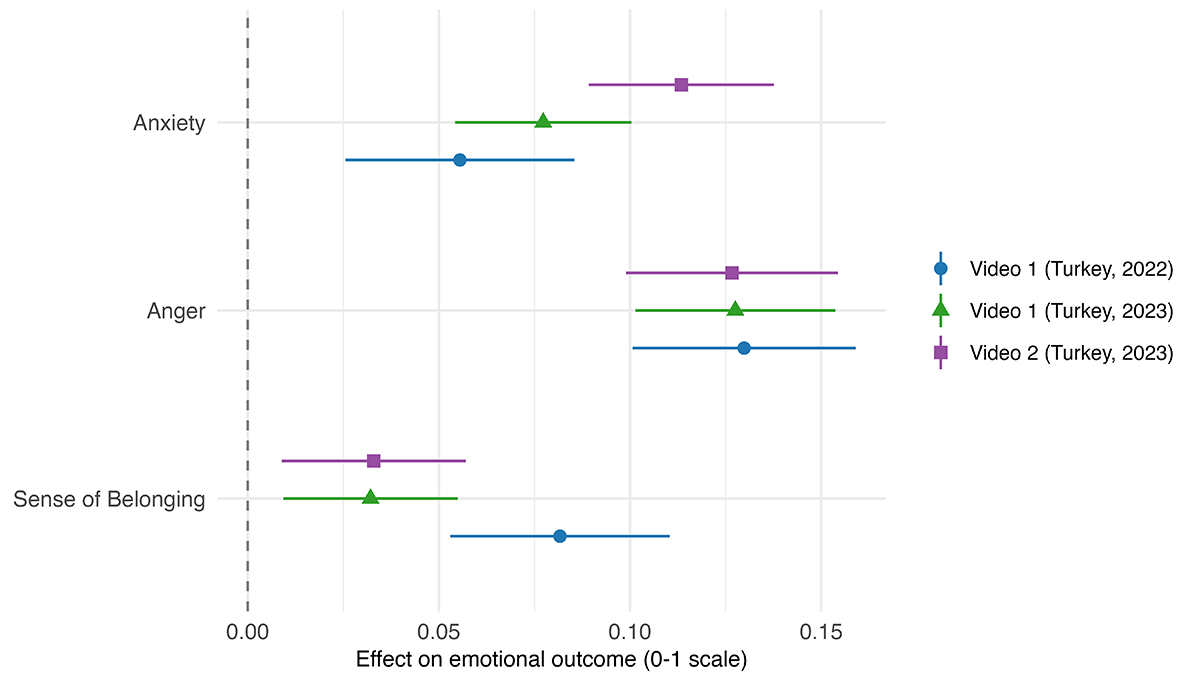
Figure 3: Effects on emotions and feelings
What this means for democracy
Our research contributes to our understanding of information control, autocratic politics, and democratic backsliding. First, we document that, most of the time, hard (visual) propaganda also works in more competitive and contested electoral autocratic regimes. Second, and comparable to recent findings from China, we find that its effectiveness in deterring opposition supporters may weaken during times of opposition mobilization and crisis. Third, hard propaganda serves a dual purpose in polarized electoral regimes. It mobilizes supporters exactly when authoritarian leaders face increased contention.
Recalling Trump’s use of hard propaganda, our results are at the same time encouraging and worrisome for US democracy. Democratic institutions protect fundamental rights, including the right to protest. In this setting, visual hard propaganda can mobilize government opponents. Yet, we did not find any evidence that Trump supporters were dismissive of such forms of propaganda in 2020. That said, President Trump’s recent hard propaganda and coercive law and order messaging around the surge in ICE deportations suggests that there may be limits to this strategy. Even among a growing number of Republican voters, his policies and rhetoric seem to have, simply, gone too far.
This blog post has been adapted from an article originally published in April 2026 in The Loop, ECPR’s Political Science Blog. It expresses the authors’ views only and not the institutions they are affiliated with.